Physical Modeling Sound and Character
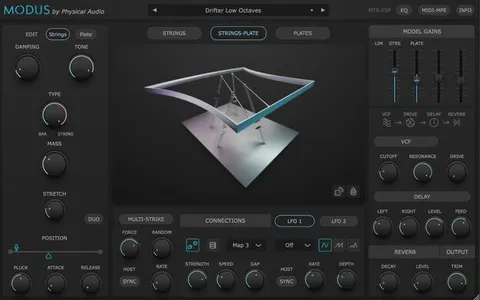
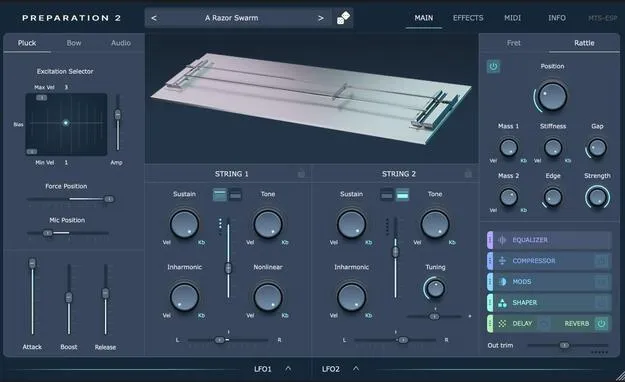
Each voice contains a pair of strings that can be excited in three ways: a pluck you design yourself, a bowed excitation with adjustable position and bow force, or external audio routed through the sidechain input. The rattle sits across both strings and passes energy from collisions at one end to the other, with variable mass at each end plus stiffness, gap and edge controls. The dynamic fret sits beneath the strings, and each string can strike it depending on how far it vibrates and how close it is.
Because the strings and the fret interact, small parameter changes can shift the sound from a plucked or bowed tone into metallic, rattling or noisy textures. Keyboard and velocity modulation let the excitation respond to how you play.